
At a glance
- Per cubic yard
- $2.50 – $15.00 defined bulk cuts
- Machine + operator
- $100 – $300 / hr small or unpredictable jobs
- Job minimum
- $500 – $800 most contractors
- Mobilization
- $750 – $1,000 per machine, on posted rate cards
- Disposal
- 20% – 40% of total the line people forget
- Tight access
- +20% – 40% urban and restricted sites
- 811 locate
- free, and required including for homeowners
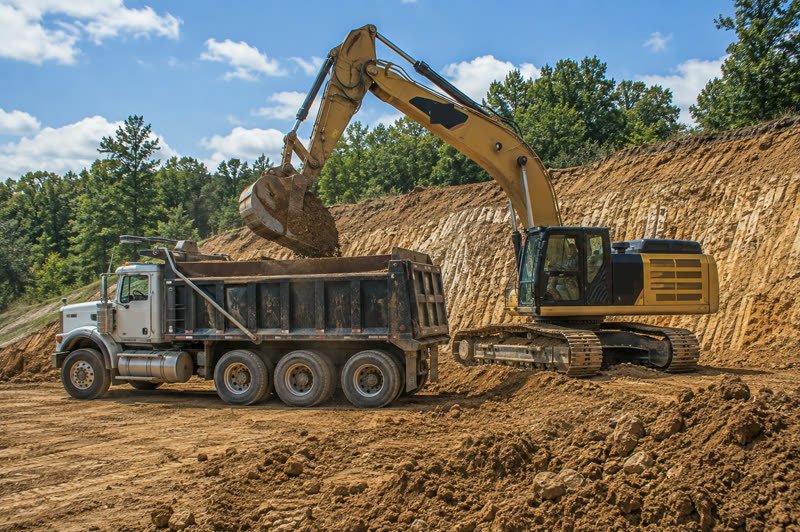
Excavation runs $2.50 to $15.00 per cubic yard, or $100 to $300 an hour with a machine and operator. Most contractors carry a $500 to $800 job minimum, and rate cards commonly add $750 to $1,000 mobilization per machine.
Both pricing bases are real. Competitor guides tend to publish one and pretend the other does not exist, which is why quotes look incomparable.
| Basis | Typical range | Average | Basis |
|---|---|---|---|
| Per cubic yard | $2.50 – $15.00 | — | Defined bulk excavation |
| Machine + operator, hourly | $100 – $300 | — | Typical on small projects |
| Mini excavator, hourly | $80 – $130 | — | Tight access work |
| 5-ton track skid steer | $145 / hr | — | Plus about $750 mobilization |
| 9-ton dozer | $145 / hr | — | Plus about $1,000 mobilization |
| 15-ton excavator | $170 / hr | — | Plus about $1,000 mobilization |
| Dump truck, hauling | $100 – $150 / hr | — | Tandem ~10–14 loose CY |
| Dump site fees, soil | $10 – $15 / CY | — | Plus $2 – $5 per mile hauling |
| Job minimum | $500 – $800 | — | Applies before anything moves |
Last updated: · Reviewed by Nisar Dalvi
Hourly or per cubic yard — which should you be quoted?
It depends on whether anyone can say in advance how much dirt is moving.
| Basis | Rate | Right for |
|---|---|---|
| Per cubic yard | $2.50 – $15.00 | Defined bulk cuts — a basement, a pond, a building pad. Quantity agreed up front. |
| Hourly | $100 – $300 | Small or unpredictable work, where what is underground is unknown until you dig. |
Hourly billing on a small job is normal and is not something to be suspicious of. What should concern you is a contractor who will not tell you which basis the number is on, or who quotes a total without saying what quantity it assumes.
What do the machines cost?
Posted rate cards give a clearer picture than averages do, because they show the mobilization charge separately — and that charge lands whether the job takes two hours or two days.
| Machine | Hourly | Mobilization |
|---|---|---|
| Mini excavator | $80 – $130 | Varies |
| 5-ton track skid steer | $145 | about $750 |
| 9-ton dozer | $145 | about $1,000 |
| 15-ton excavator | $170 | about $1,000 |
Basis: published contractor rate cards and 2026 aggregator data. Mobilization is per machine — a job needing an excavator and a dozer pays it twice.
What does it cost to get the dirt off site?
Disposal is 20% to 40% of total excavation cost. Our calculator tells you how many cubic yards come out of the ground. This is the part that costs the money.
- Dump trucks bill $100 to $150 an hour
- A tandem carries roughly 10 to 14 loose cubic yards; a tri-axle 16 to 18
- Commercial dump sites charge $10 to $15 per cubic yard for soil
- Hauling adds $2 to $5 a mile
Whether haul-off is in your quote varies by contractor, so confirm it as a line item. Clean fill is sometimes taken free by someone who needs it — always worth asking, because it can remove the disposal line entirely.
Remember that soil swells once it is dug. The loose volume you are paying to truck away is larger than the hole you measured, which is exactly what our excavation cost calculator accounts for.
How much does access change the price?
It is the multiplier nobody publishes, and it can be the largest single factor on a small site.
- Easy access — dump truck and backhoe can get to the work. This is where the low end of every range comes from.
- Restricted access — only smaller equipment fits, so cost per yard rises. Urban jobs typically run 20% to 40% higher.
- No spoil room — nowhere to stage material, so every bucket goes straight into a truck and the machine waits when no truck is there.
- Machine walked in, or a dig reachable only through a fence line needing hand work. Production collapses while the hourly rate continues.
The mechanism is always the same: cost per cubic yard is production rate divided into an hourly rate. Anything that slows production raises the effective price even when the quoted rate has not changed.
Do I have to call 811 before digging?
Yes, and the locate is free. Calling before you dig is a legal requirement for homeowners, not only contractors. In Texas that means contacting 811 two business days ahead — even in your own backyard.
Skipping it carries state civil penalties into the thousands, and far larger federal exposure where pipelines are involved. Owners and contractors are generally liable for what they hit — but if you called and the line was unmarked or mismarked, liability shifts to the utility. That protection only exists if you made the call.
One limitation matters: 811 marks utility-owned lines only. Private laterals — irrigation, power to an outbuilding, your own septic lines — are not marked, and finding those is a private locator's job.
Basis: convergent 811 and state one-call guidance, 2026. We could not read the Texas statute text at source — the state legislature site refuses automated requests — so no section number is cited here. Confirm your own state's notice period with your local one-call center.
What is not in the quote?
- Hauling and disposal, unless explicitly stated
- Backfill and compaction
- Final grading
- Erosion control, which the stormwater rules may require once you disturb an acre
- Rock breaking — rarely in a base price, because nobody knows the rock is there until the digging starts
If your excavation is part of clearing a raw parcel, the order of operations matters: clearing comes first, then grubbing, then excavation and grading. Pricing them as a single job is how budgets go wrong.
Sources
Every figure on this page traces back to one of these. Open them and check us — that is what they are here for.
- US EPA — Stormwater Discharges from Construction Activities The one-acre federal permit threshold for clearing and grading.
- USDA NRCS — Web Soil Survey Free soil series and percolation data for any US parcel.
Links verified August 2026. Tell us at info@landclearingandexcavation.com if one has moved.
Frequently asked questions
How much does excavation cost?
$2.50 to $15.00 per cubic yard for defined bulk work, or $100 to $300 an hour for a machine with an operator.
Most contractors also carry a job minimum of $500 to $800, and posted rate cards commonly add a mobilization charge of $750 to $1,000 per machine to get it to your site and back.
Should I be quoted hourly or by the cubic yard?
Both are legitimate. The difference is how well-defined the job is.
Per cubic yard suits a measurable bulk cut — a basement, a pond, a pad — where everyone can agree in advance how much dirt is moving.
Hourly suits small or unpredictable work, where nobody knows what is under the surface until the bucket is in it. On a small job, hourly is normal and is not a red flag.
What you should not accept is a quote that will not say which basis it is on.
What does it cost to haul the dirt away?
More than most people budget. Disposal is typically 20% to 40% of total excavation cost.
Dump trucks bill $100 to $150 an hour. A tandem carries roughly 10 to 14 loose cubic yards, a tri-axle about 16 to 18. Commercial dump sites charge $10 to $15 per cubic yard for soil, plus $2 to $5 a mile in hauling.
Clean fill is sometimes taken free, which is worth asking about. Always confirm haul-off as a separate line item rather than assuming it is in the price.
Why does excavated soil take up more room than the hole?
Because soil swells when you dig it. Undisturbed ground is compacted; loose material is not, so the same dirt occupies noticeably more volume once it is out.
This matters twice. It decides how many truckloads you are paying for, and it decides whether there is anywhere on site to put the spoil while work continues.
How much does site access change the price?
Substantially. Restricted or urban sites run 20% to 40% higher, and difficult access can effectively double the cost.
Prices sit at the low end with easy dump truck and backhoe access. They rise sharply when only smaller equipment fits, when spoil has to be moved a long way, or when there is nowhere on site to stage it.
The reason is production rate. A machine walked in through a gate, or a pool dig reachable only through a fence line needing hand digging, produces far fewer cubic yards per hour — while the hourly rate keeps running.
Do I have to call 811 before digging on my own property?
Yes. The locate is free and calling is legally required, homeowners included — in Texas, that means contacting 811 two business days before you dig, even in your own backyard.
Penalties for skipping it run into thousands in state civil fines, and far higher where pipelines are involved. If you called and a line was unmarked or mismarked, liability generally shifts to the utility — which is the entire reason to call.
The catch worth knowing: 811 marks utility-owned lines only. Private laterals — irrigation, a feed to an outbuilding, your own septic lines — are not marked and need a private locator.
What is usually excluded from an excavation quote?
The items that follow the digging. Hauling and disposal, unless it is stated. Backfill and compaction. Grading to final level. Erosion control. Any rock breaking if the machine hits material it cannot dig.
Rock is the big one. It is rarely in a base price because nobody knows it is there until the excavation starts.
Get quotes from local contractors
Tell us about the job and we will pass it to licensed contractors who work in your area. No cost, no obligation.